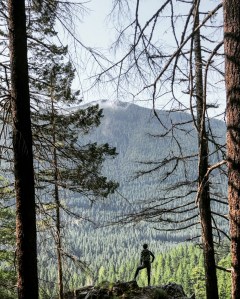
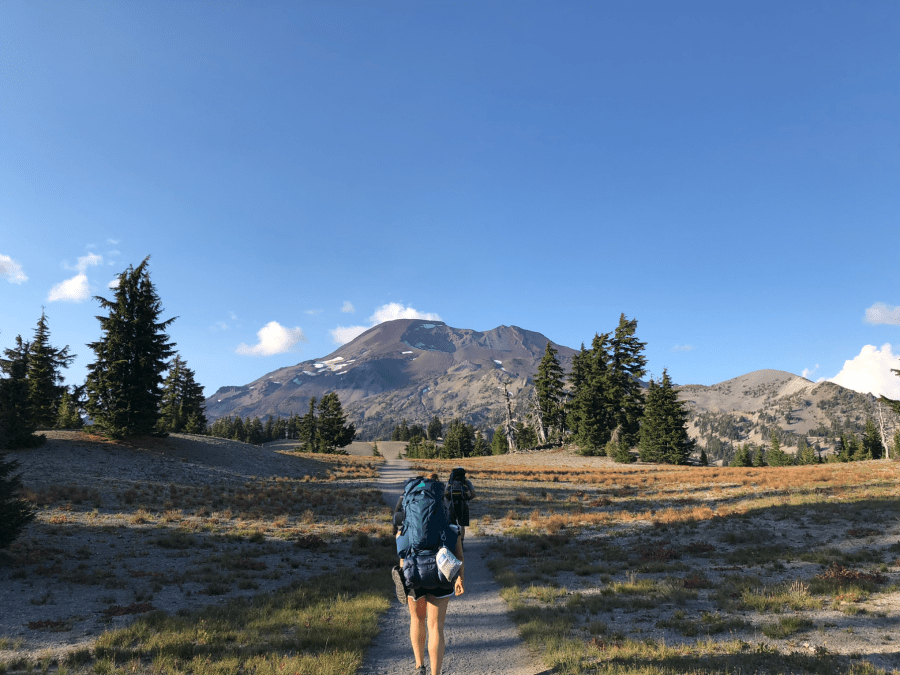
If you are considering taking your hiking to the next level, you should consider taking on the third tallest mountain in Oregon: South Sister. Of the Three Sisters, South Sister is not only the tallest but is also the most popular to hike. Once at the summit, South Sister offers up the whole world at your feet. Just out of reach are Broken Top, Mt. Bachelor and the two other Sisters, all of which pale in comparison to South Sister.

Hiking South Sister is already memorable as is, but I decided to take it to the next level. Instead of picking just any day of the week to hike, I decided that the best way to leave my 20’s behind was to watch the sunrise from the summit of South Sister the morning of my 30th.
Only those who will risk going too far
Can possibly find out how far they will go.
The most popular trail-head starts at Devil’s Lake campground, just off of HWY 46. A five dollar fee is required for a day pass permit if you do not already have the year pass.
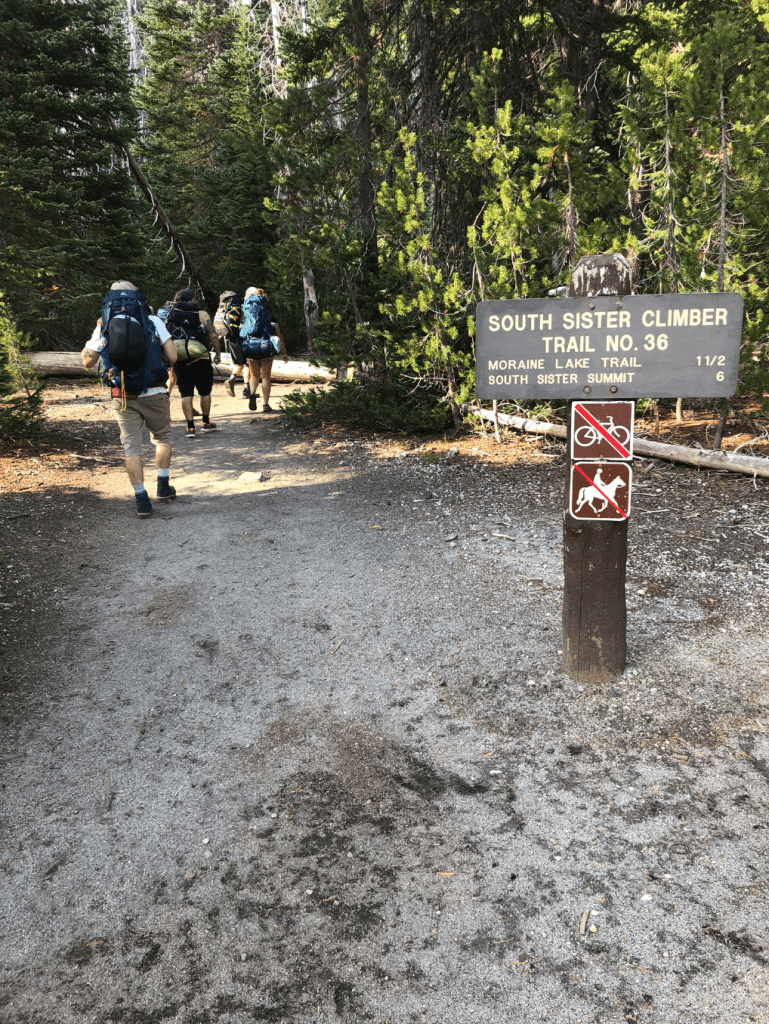
Although the hike is only 12 miles round-trip, bring extra water and lather up in sunscreen because the trail is in the direct sunlight most of the time.
We started on the trail about 4:30pm, knowing that we had at least three hours before the sun went down to reach Moraine Lake to set up camp. The intensity starts off right away: for the first couple of miles, the trail is steep. Even just the small altitude change that happens in this beginning area is enough to get your lungs revved up and leave you panting.
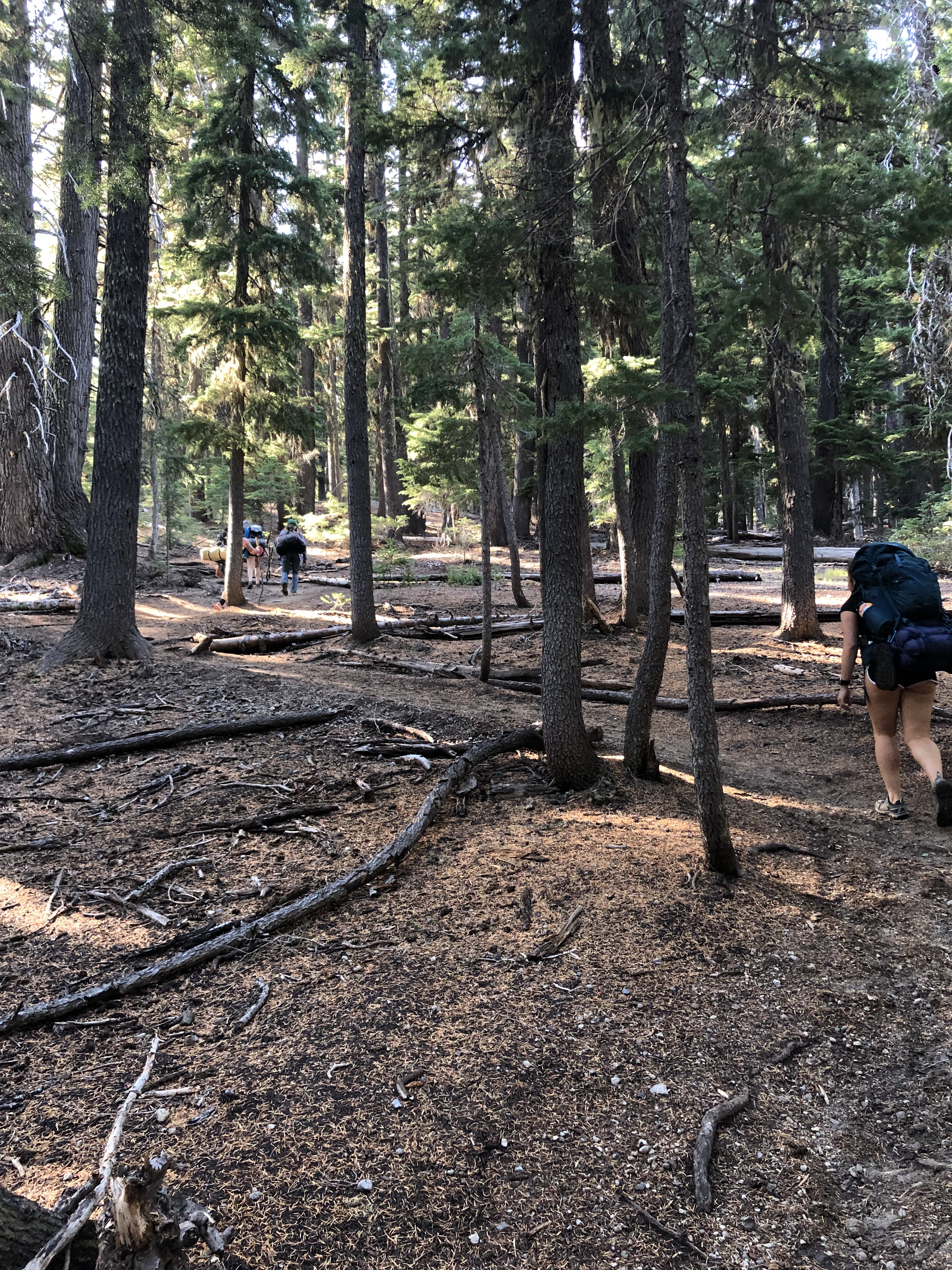
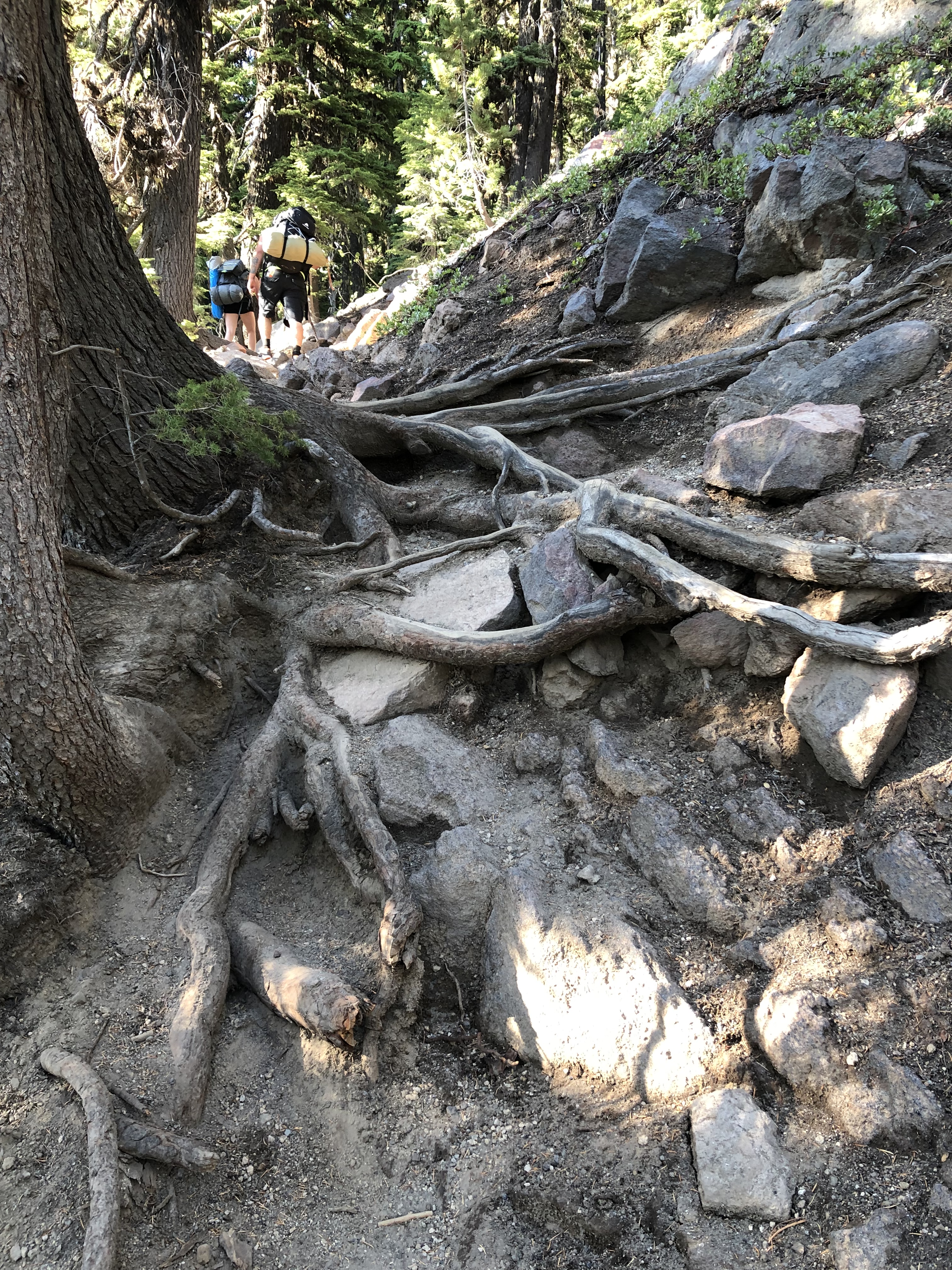
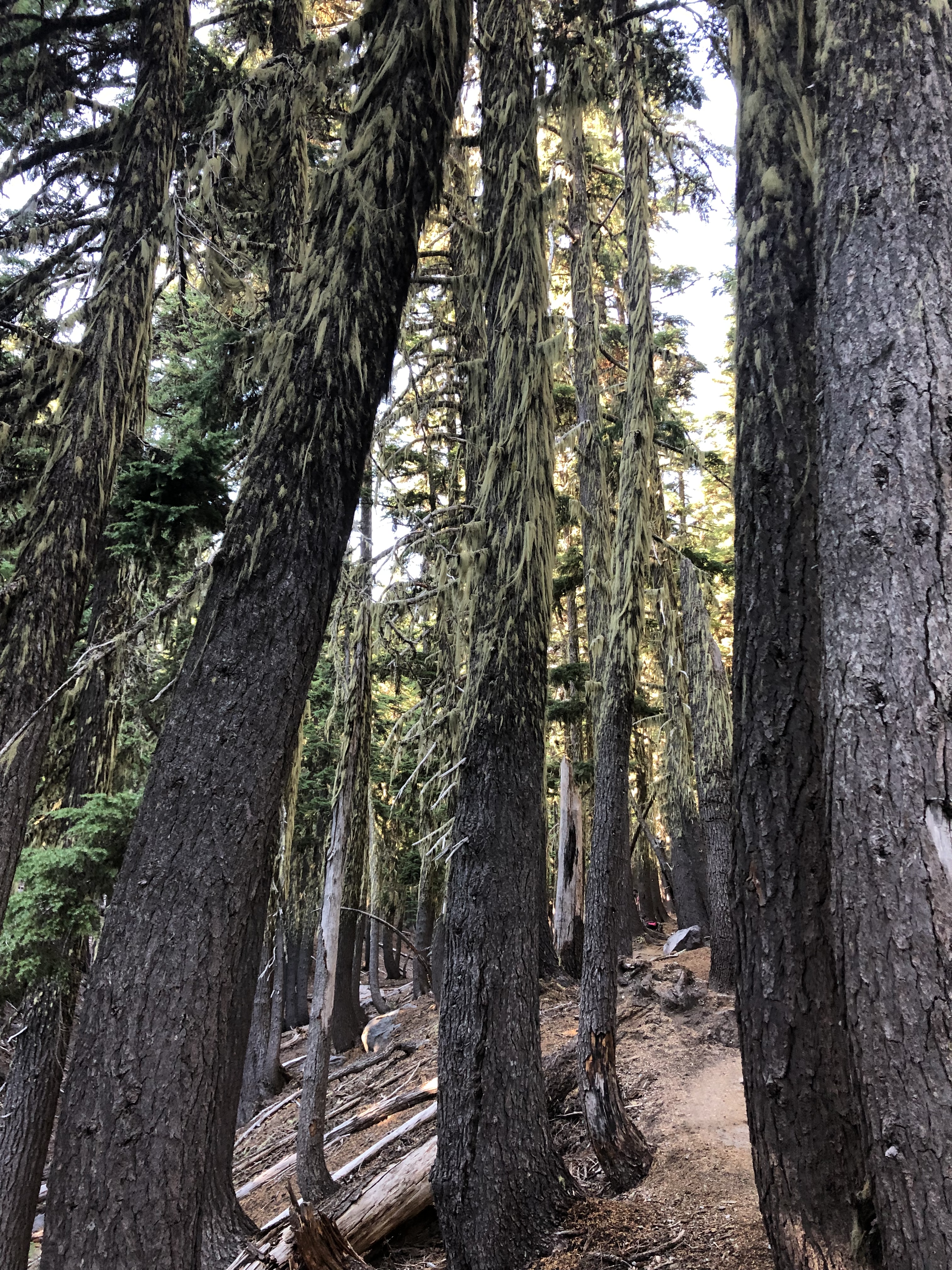
The trees in this area are not very dense, but give enough coverage from the pounding sun above. Some of them have even incorporated their roots into the trail, causing nature-made stairs at some of the steeper points. These trees allow for some distraction from the lung and leg pain for me.
One thing that I have discovered about myself, over the last few months of hiking, is that I become mesmerized by the way that the moss hangs off of the trees. The trees themselves offer a pupil-dilating experience, but another element is added by the moss.
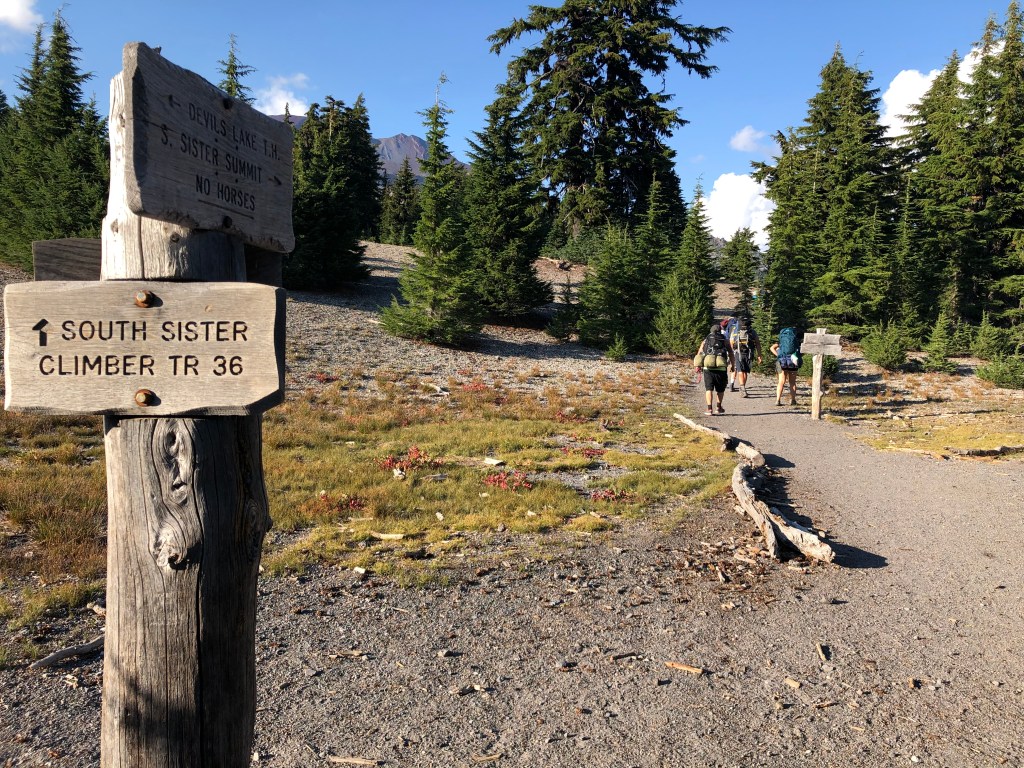
After climbing for a couple of miles, the path starts to level out when the trees start to thin. Much like Broken Top, the trail opens into direct sun exposure. Mt. Bachelor and Broken Top start making their appearance off to the right, while South Sister stands in all her glory up ahead. It is also around this time that the trail intersects. Keep straight to reach Moraine Lake and, eventually, the summit.
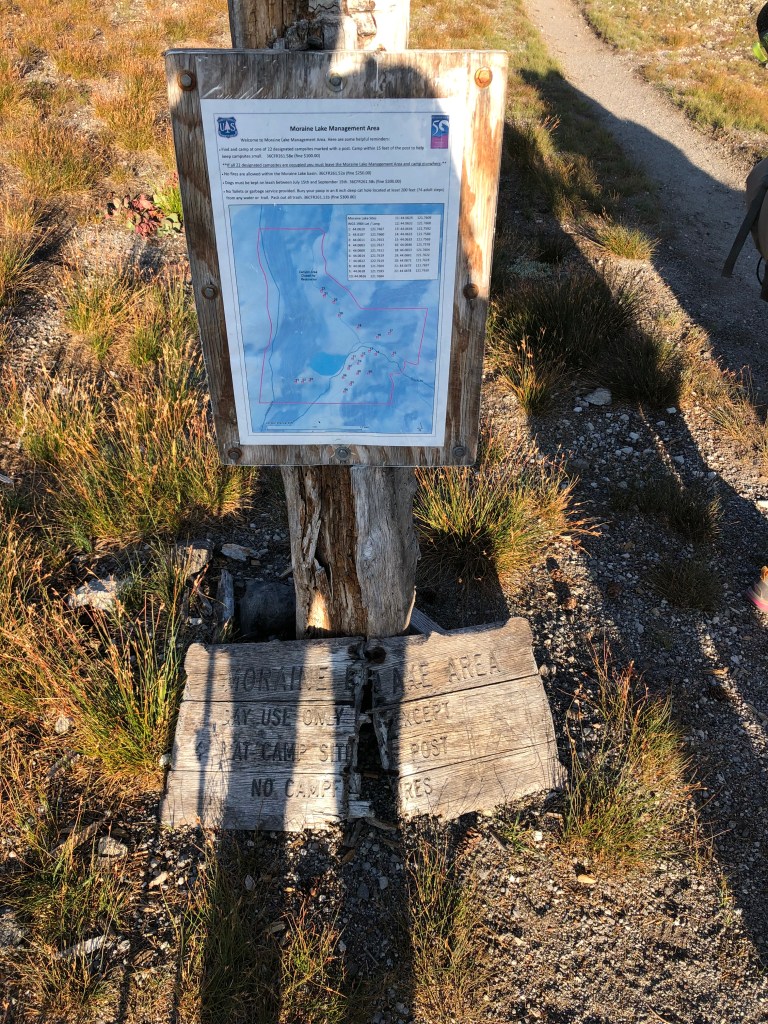
Moraine Lake is just a little less than half way to the summit. It allows for an excellent place to camp out, that way you beat the other sunrise seeking travelers in the early am. There are designated camping areas around the lake, so be sure to check out the map to make sure you’re within the campsite zone.
Once we found the perfect spot for a handful of tents, we got camp set up and a fire started all before the sun started to go down. Being surrounded by nature with good friends made exiting my 20’s feel even better than I could have imagined.
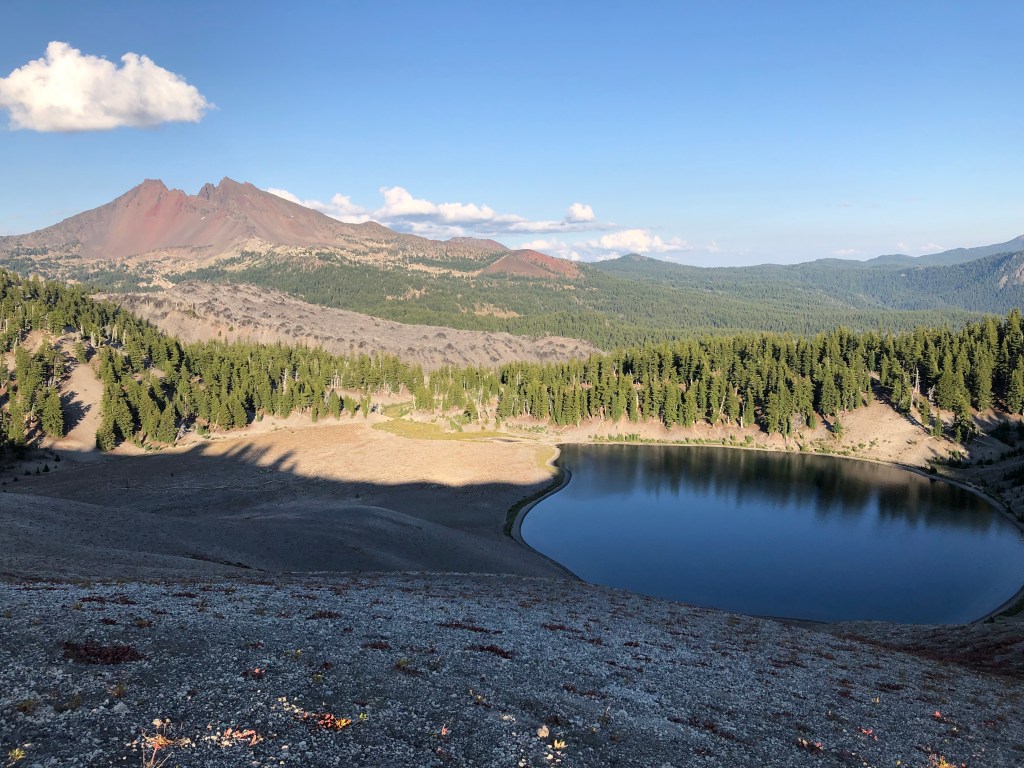
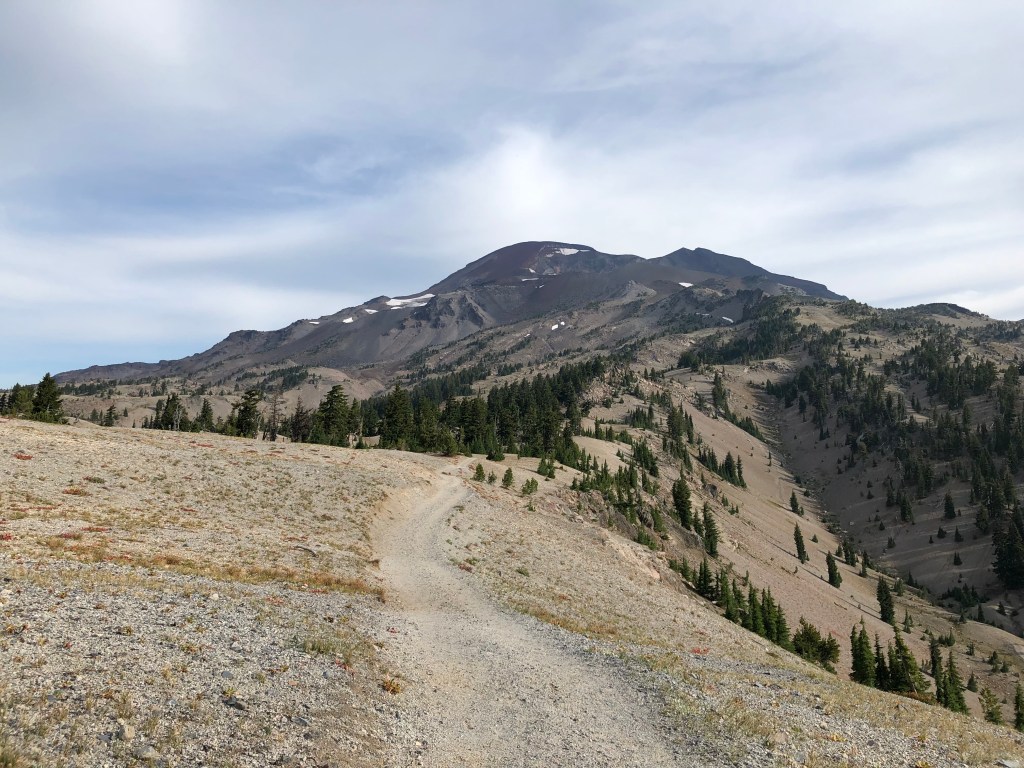
We decided that if we wanted to catch the sunrise from the summit, which was a little more than three miles more, we should allow ourselves enough time to account for steepness and elevation change. So, the alarm went off at 2:00am.
The cloudless sky allowed for the whole galaxy to shine down. The visibility of every constellation and a handful of shooting stars made for a peaceful backdrop for the long hike ahead.
Since it was pitch black and our headlamps only allowed for a small amount of visibility, I relied on the AllTrails app to guide us through the dark. Luckily this trail had decent cell reception, so tracking the trail wasn’t difficult.
For those who take on South Sister during the daytime, there are markers throughout the whole trail indicating which way the trail continues. If AllTrails isn’t available to you, look for a big stick mounted in a pile of rocks.
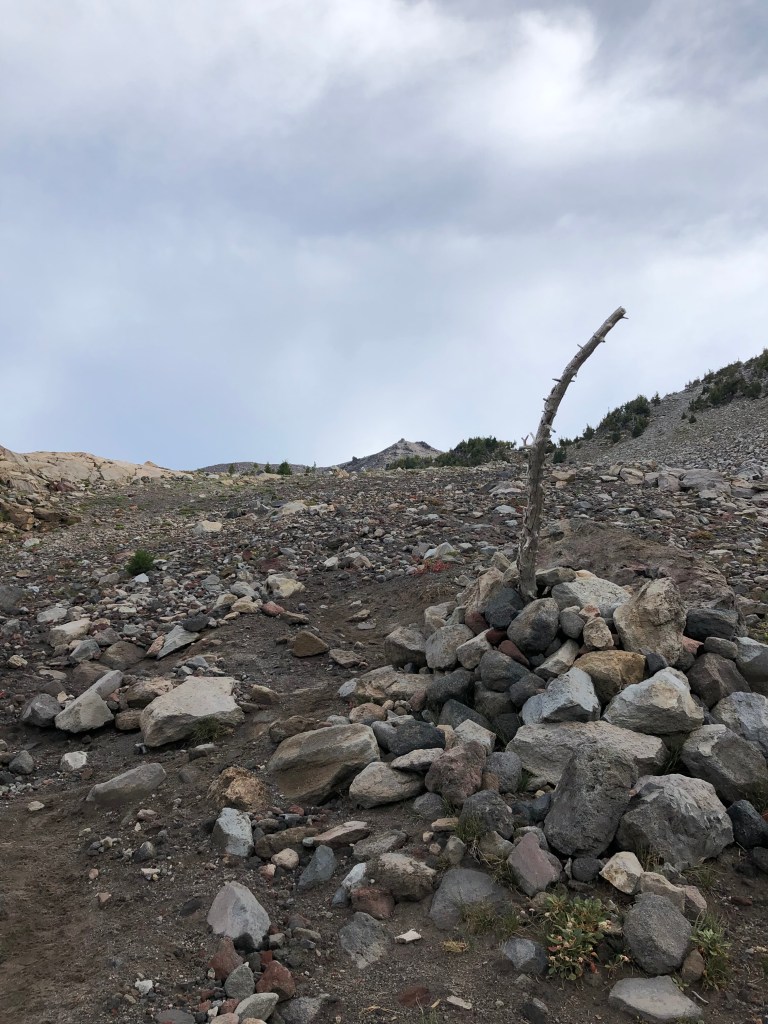
The journey in the dark obviously limited any idea of what the surroundings were. It wasn’t until coming back down did we get to see how open the trail was. From Moraine Lake heading up, it’s steadily uphill. Forget any straightaways or relief. They trail is also very rocky. The mountain is littered with boulders, lava rocks and obsidian. I advice caution when trekking through here because ankles are vulnerable.
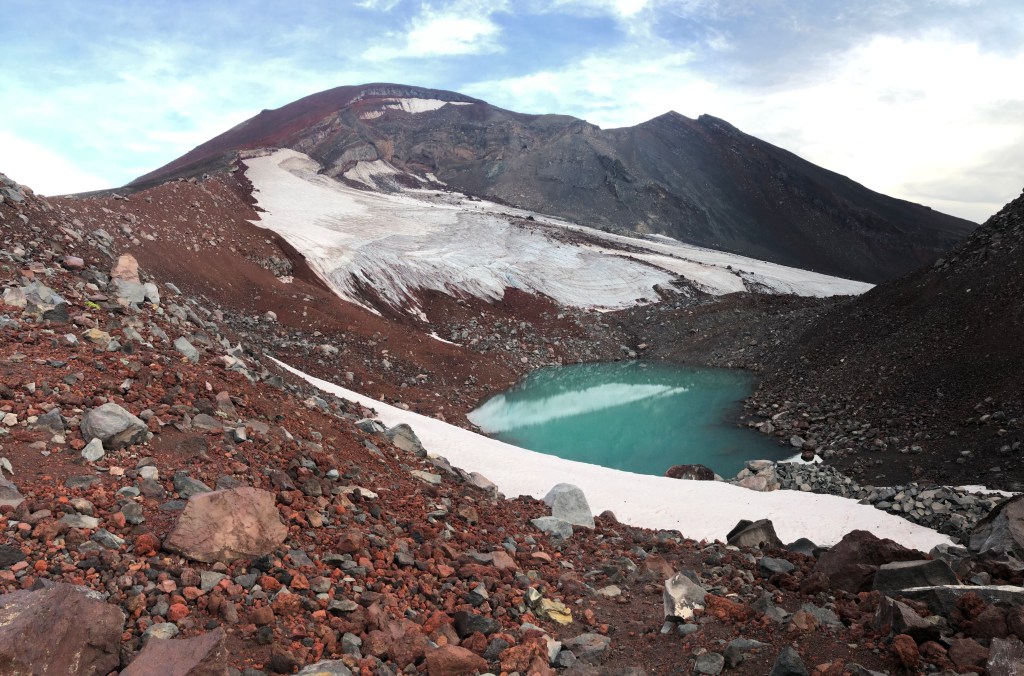
After hours of hiking up in the dark, we knew that the hardest park was still ahead. The last mile of the hike is said to be the absolute worst. Once you have reached the smaller glacier lake, you’ll cross over a ridge to the left of it and start the cinder ridge, also known as the Red Mile.
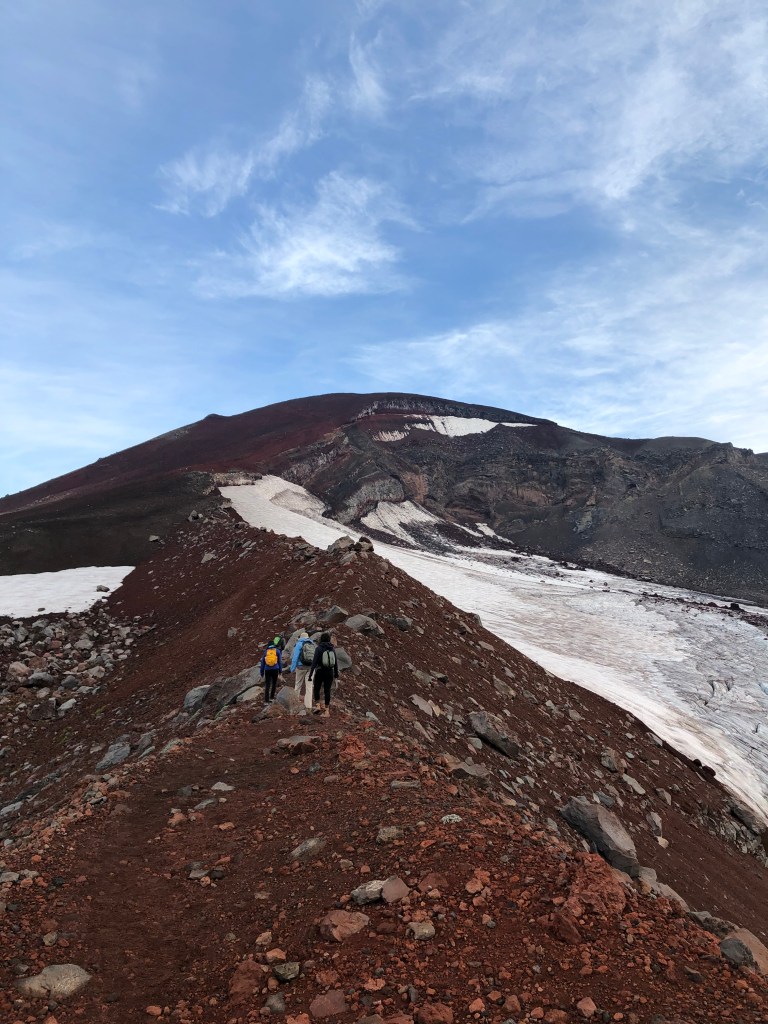
The Red Mile, as mentioned before, is the toughest part of the climb. Not only is it extremely steep, but the trail itself is made up of loose lava rocks, which make for difficult foot placement. Every step was sinks and slides back just enough that, at times, makes it feel like you’re walking in the same spot over and over. As if that wasn’t enough, the drastic elevations change starts putting your lungs into overdrive and possible dizziness.
As the sky started to lighten up in the East, I knew that the sun would be making an appearance soon, which kept me motivated to keep my head down and feet moving forward. The last mile truly isn’t a joke. It felt like it eternity. When the summit ridge came into view, I had a burst of energy and almost ran up the last few hundred feet. I have never felt more accomplished than when I reached the top. Tears of pure joy welled up in my eyes.
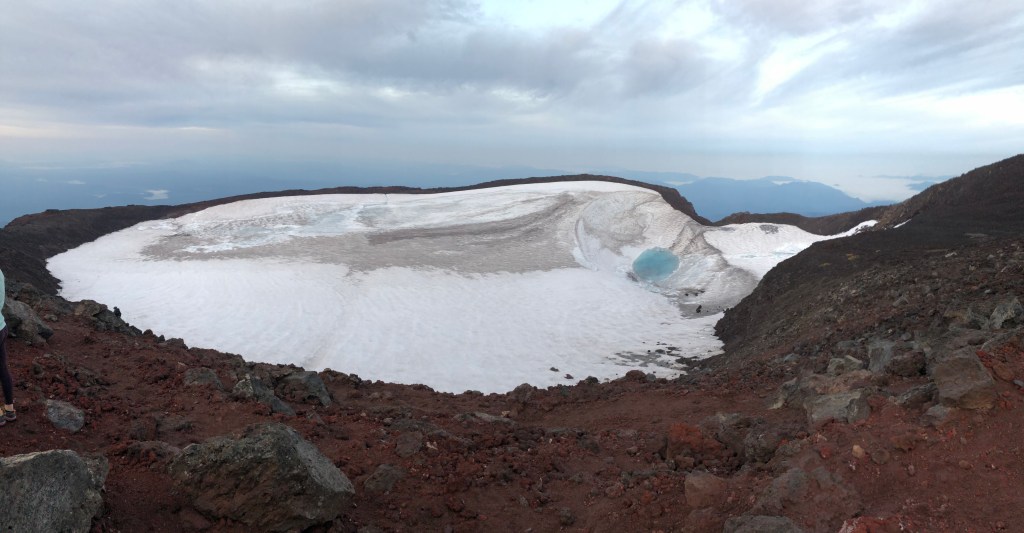
At the top, there is still a small amount of traveling to reach the actual summit. Luckily, it’s no longer uphill. You can either walk through the center of the snow field, or walk around the rim. The outer rim was easier to walk. There are also some man-made stone huts that tempted me to camp up at the summit one day.
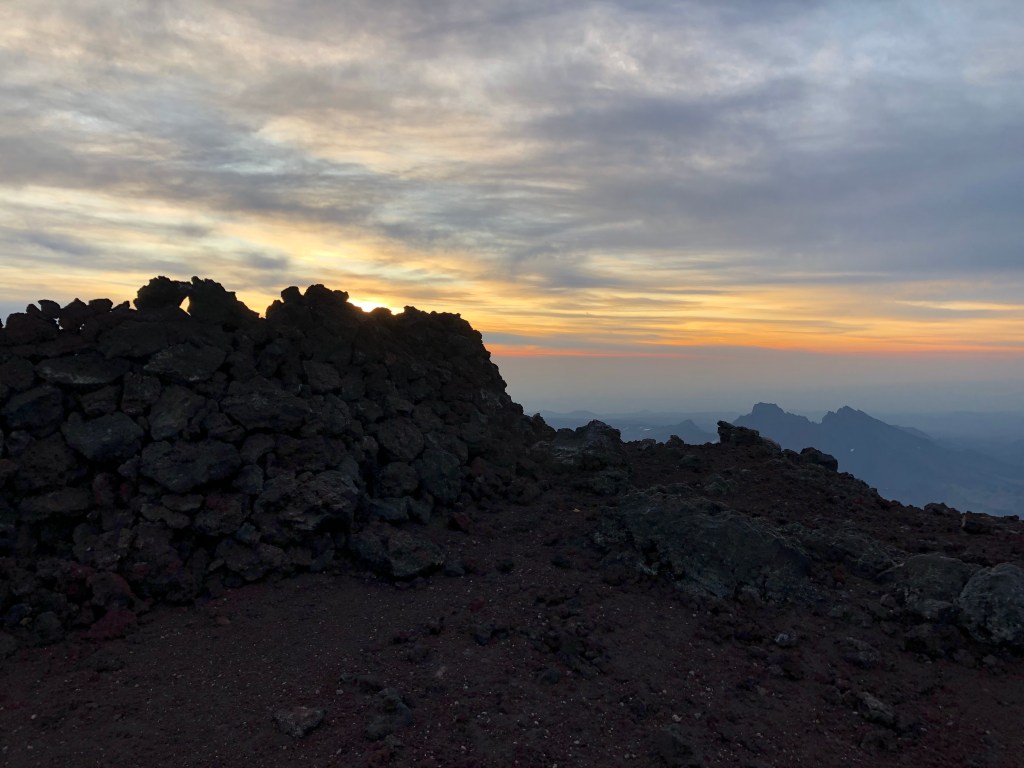
Once we made our way around, we found the best spot to watch the sun come up. It was extremely cold and the wind was treacherous, but the view made it all worth it. The sun was to start rising at 6:35am and we were seated front row by 6:15am. Four grueling hours of hiking the third tallest mountain in Oregon, in complete darkness, made sitting down and watching the world come to life magical.
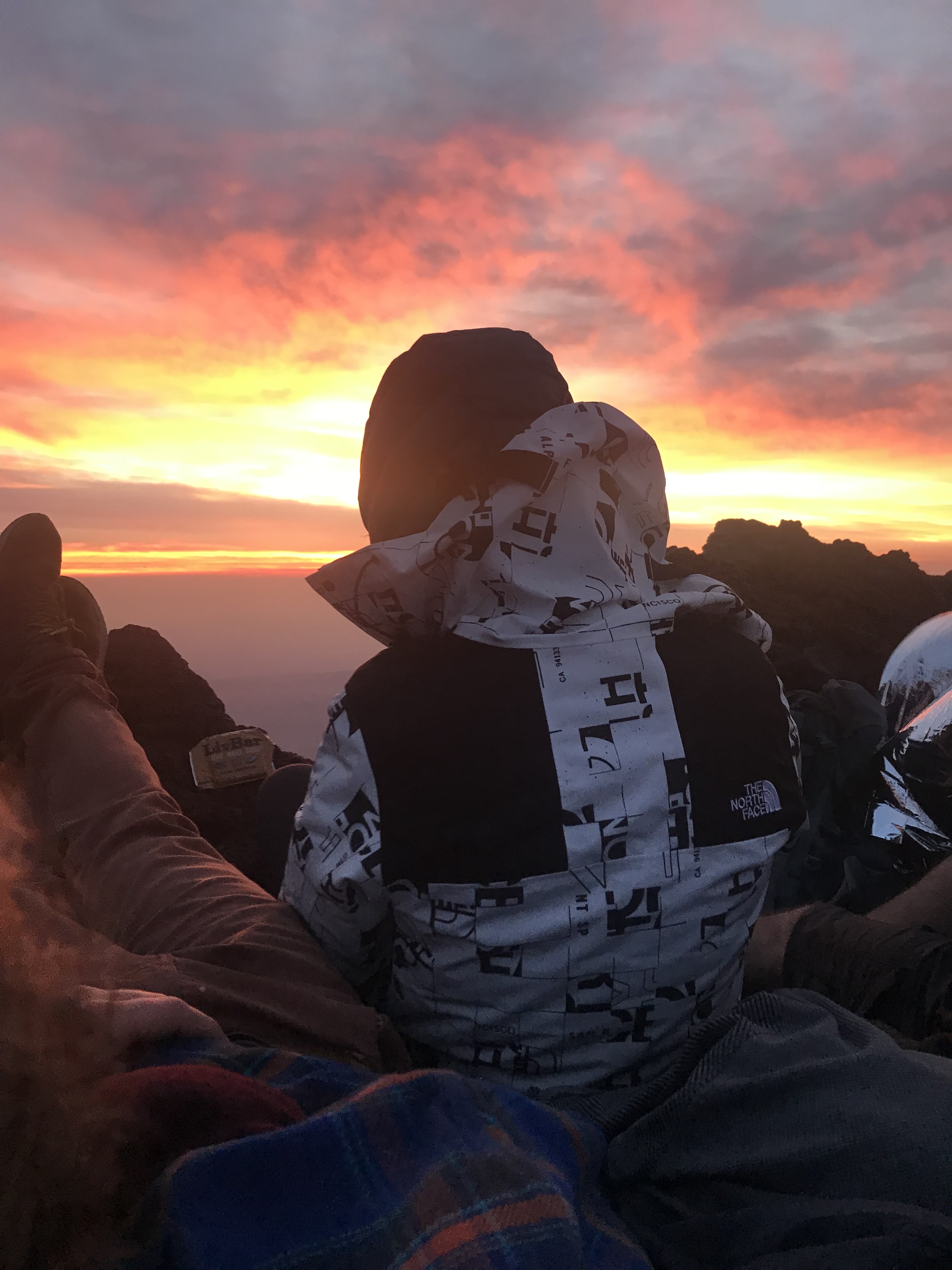
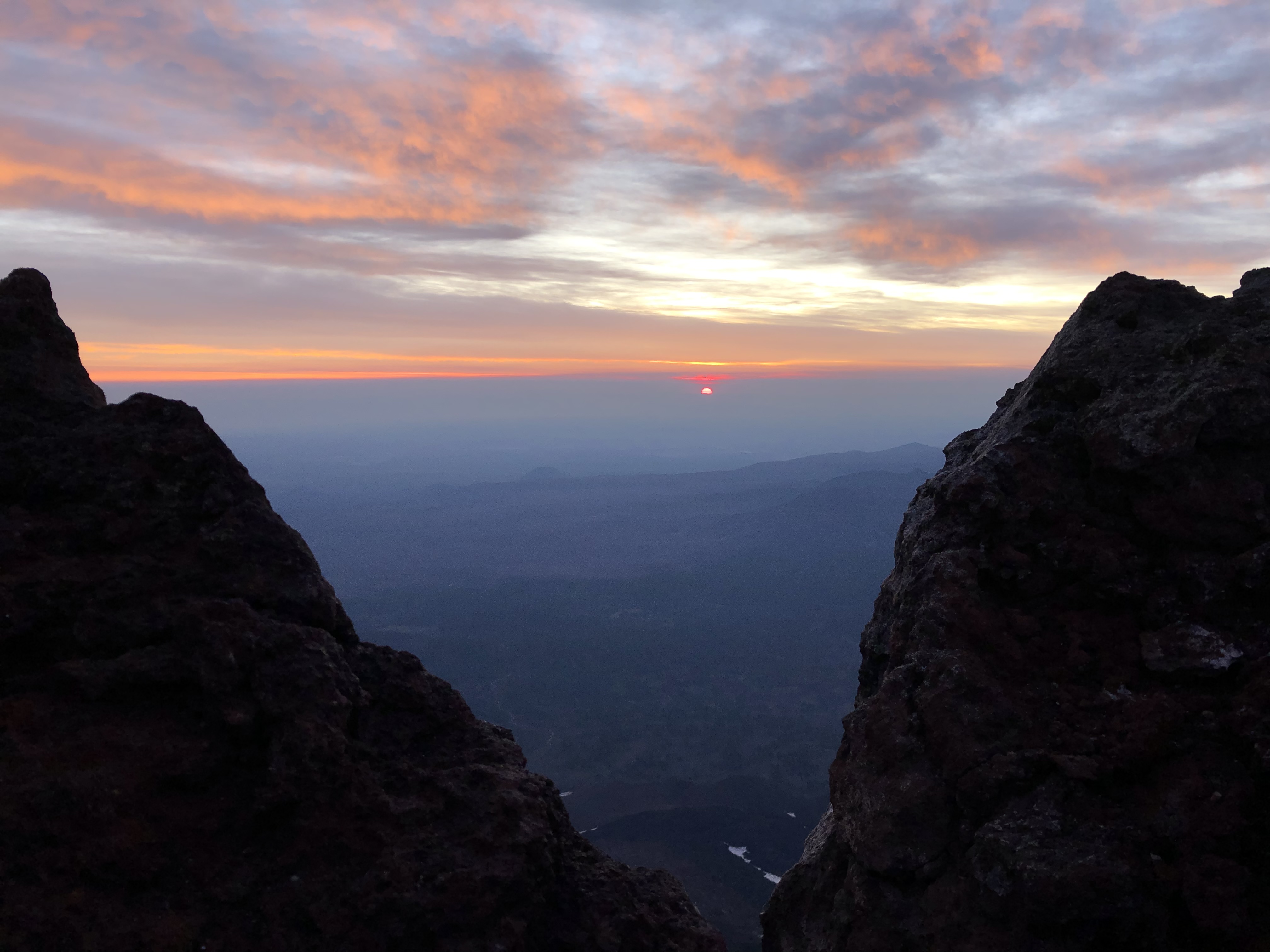
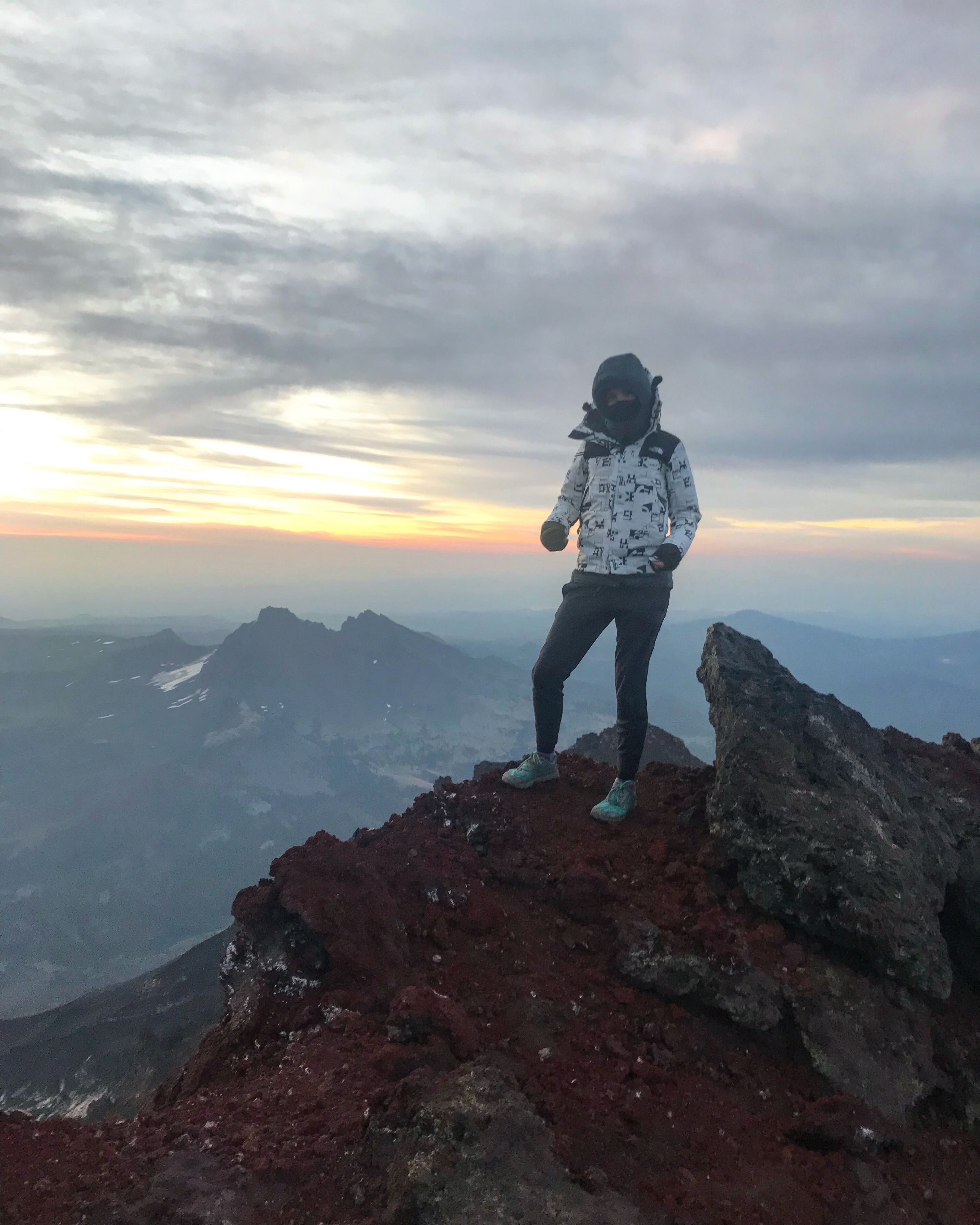
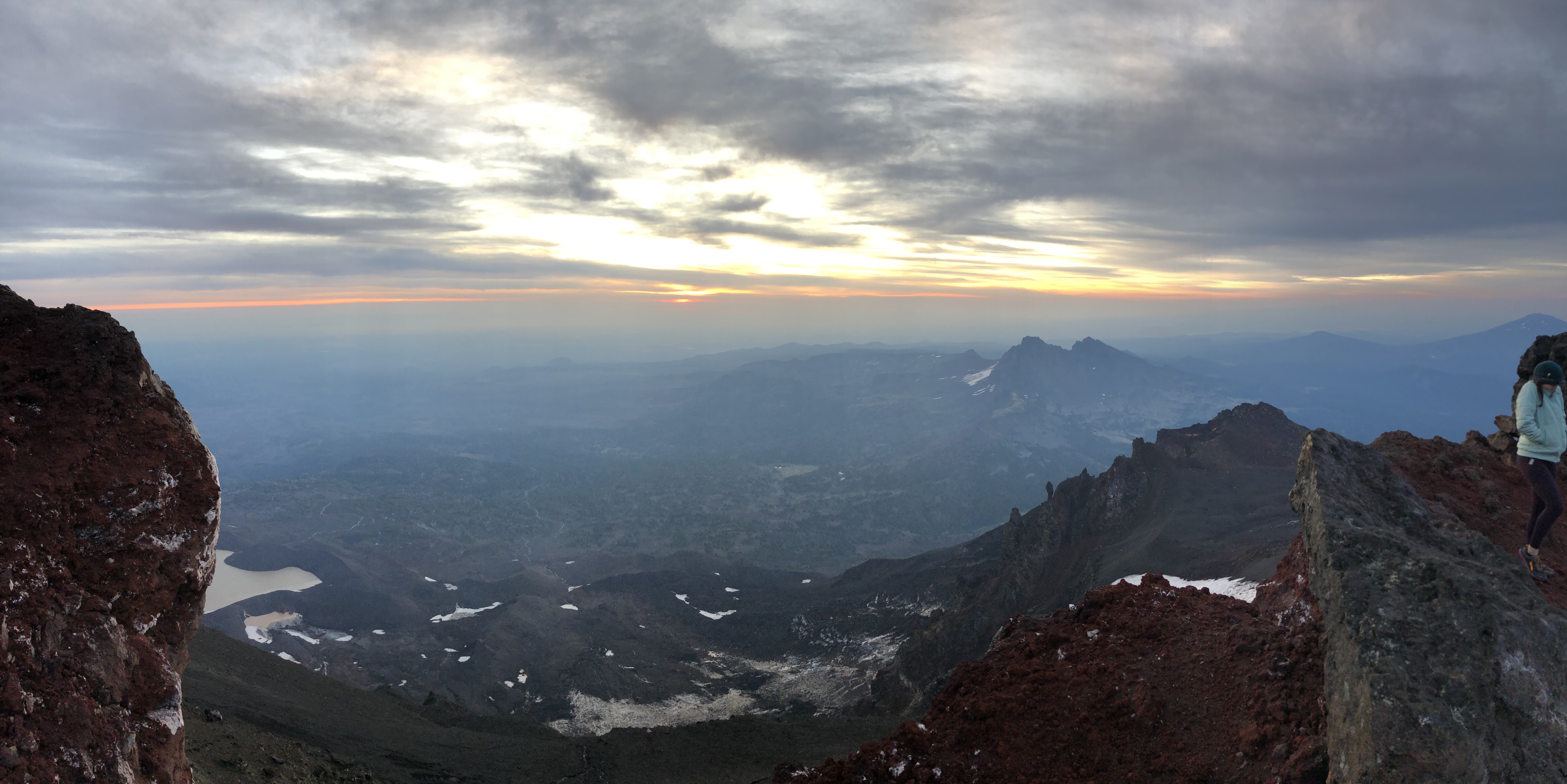
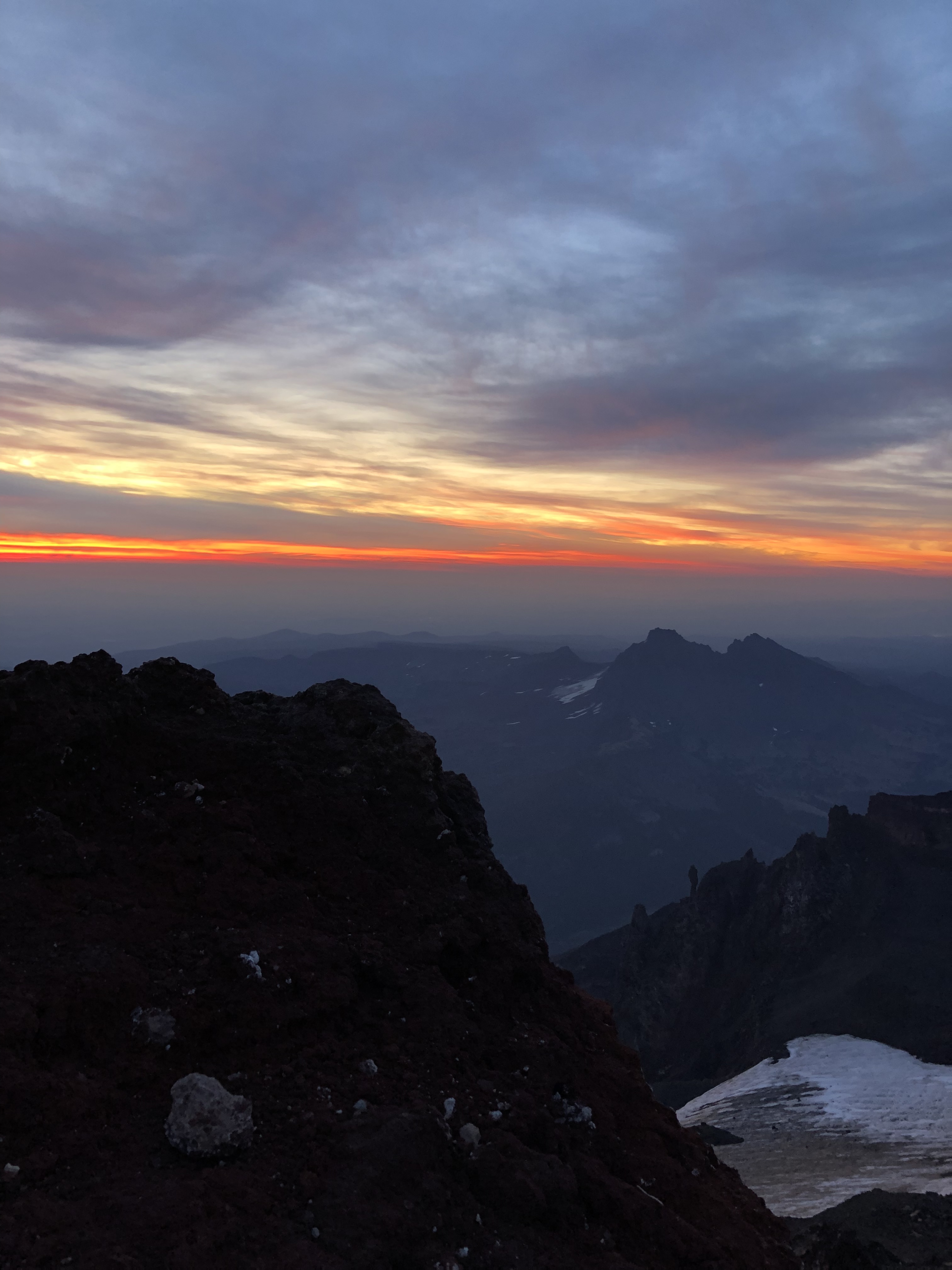
Although South Sister is only roughly 12 miles, it was one of the most challenging hikes to date. The steepness is nonstop and the drastic elevation gains challenge not just the body, but the mind as well. Nausea and dizziness is a normal reaction to the elevation change, so take your time and stay hydrated.
Most people take on this hike in the daylight, but I highly recommend upping the challenge by starting in the early morning to catch the sunrise. Not only do you get a one of a kind experience watching the world light up, but not being able to see the couple false summits on the way up alleviated the let down of reaching the top only to realize there is more to hike.
All in all, South Sister is absolutely worth conquering. I already plan on tackling this hike again next summer, as you should, too.
Big Hike Up Next: Machu Picchu
 alExxplOregon